

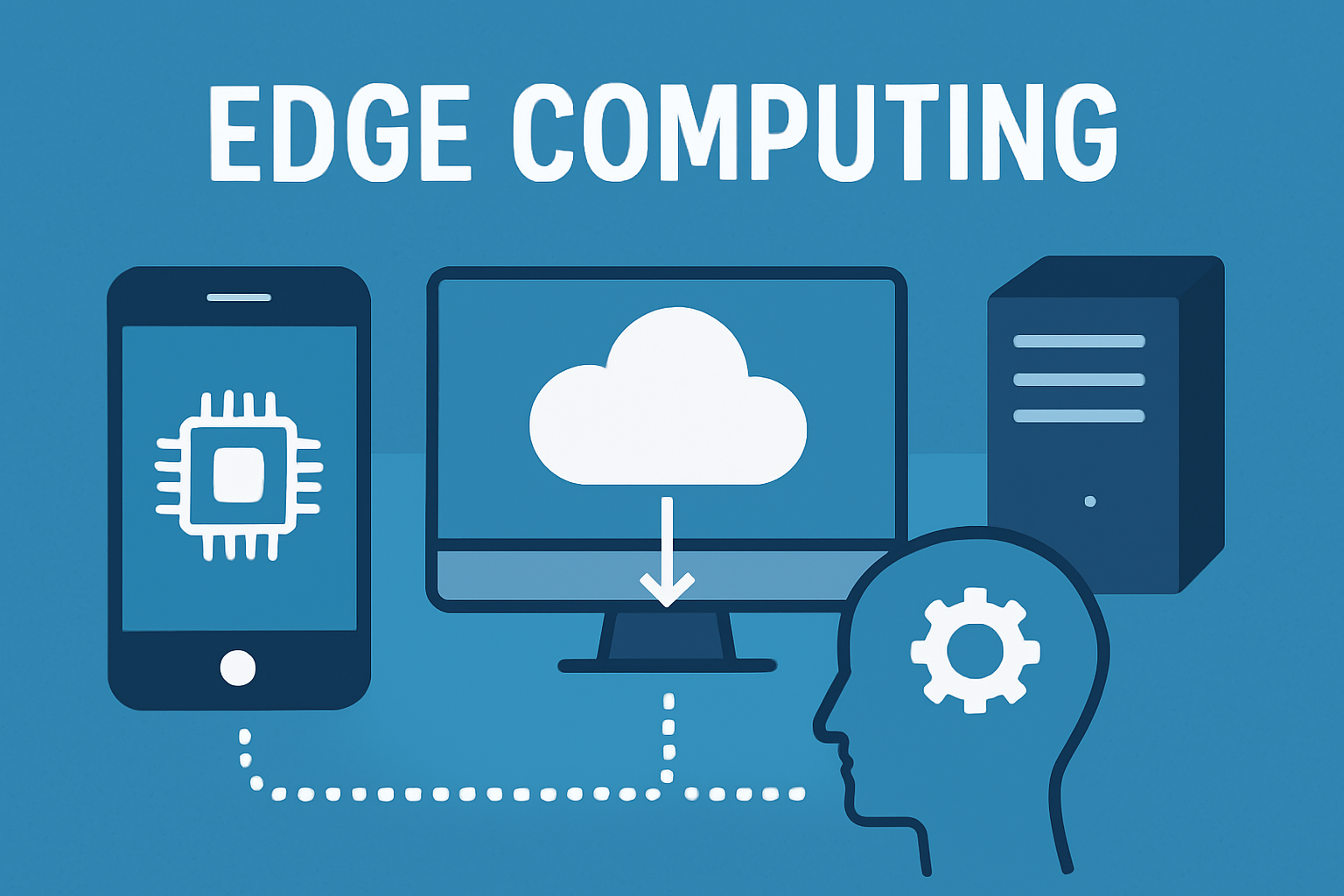
Technology is advancing rapidly, and every day our devices—phones, watches, TVs, cameras—are doing more than ever before. But to keep it all running smoothly, we need some smarts behind the scenes. One of the latest and most powerful technologies to help us is edge computing.
What Is Edge Computing?
Think of the internet as a large city and data (information) as cars running on the streets. Previously, each car had to travel long distances to reach the city’s main hub (a central server or cloud) and return with results. This took time.
Edge computing means building small “mini-cities” (small servers/computers) near the data generation site. So the car doesn’t have to travel as far; it gets the answers from a nearby point. This greatly speeds up the process.
In simple words:
Edge computing processes data closer to its source (e.g. near your phone, CCTV camera, sensors, etc.) rather than sending everything far away to the cloud.
Why Is Edge Computing Needed?
Today we use many devices that generate massive amounts of data every second. Examples:
- Smart watches tracking your heartbeat
- CCTV cameras recording 24/7
- Smart cars (like self-driving cars)
- IoT devices in factories
- Delivery robots, smart traffic lights, etc.
If all this data were to go to a remote server, it would be slow, expensive, and sometimes insecure. That’s why computing is being moved to the “edge.”
Benefits of Edge Computin
- Faster Performance
When data is processed locally, results are faster.
Example: A self-driving car can’t wait 2 seconds for a server response—it needs an immediate response.
- Better Privacy
Your data stays at the source and isn’t sent everywhere.
This reduces the risk of data theft or leakage.
- Less Internet Usage
Not everything needs to go to the cloud.
Edge reduces bandwidth and saves cost.
- Works Even Without Internet
Edge devices can function even if the internet is slow or down.
Example: A smart factory machine can continue to operate even if the connection is lost.
Where Do We Use Edge Computing?
AI features like face detection, voice recognition now process data inside the phone.
Smart & Self-Driving Cars
Cars use edge computing to make instant decisions like braking or lane changes.
Factories
Machines send data to local edge computers for quick monitoring and safety alerts.
Hospitals
Patient monitoring devices can send real-time alerts without delay.
Smart Homes
Cameras, doorbells, and smart devices can make quick decisions using edge.
Edge Computing vs Cloud Computing
| Cloud Computing | Edge Computing |
| Data is processed in large remote servers | Data is processed near the device |
| Slower for time-sensitive tasks | Very fast |
| Needs strong internet | Can work even with weak internet |
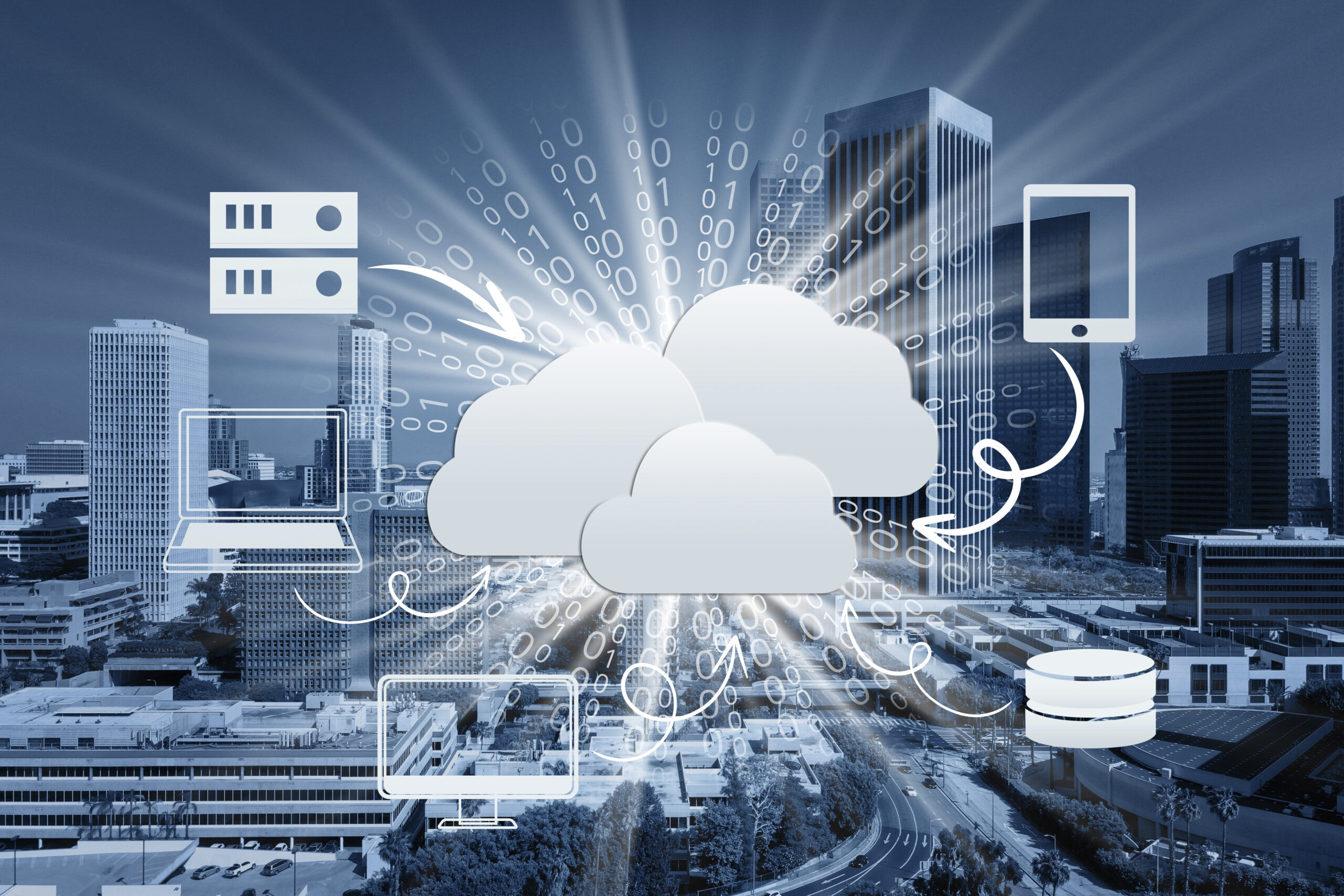
| Good for big analysis | Good for quick decisions |
Both are important, and often they work together.
The Future of Edge Computing
More devices are becoming smart. The next few years will bring:
- Smarter cities
- Faster 5G and 6G networks
- Better AI in daily gadgets
- Real-time decision making in industries
Edge Computing will be the backbone behind all of this.
Conclusion
Edge computing is like bringing the power of large computers closer to us—closer to our homes, devices, cars, and workplaces. This makes things faster, safer, and more efficient. As technology evolves, edge computing will become a major part of our digital world.
A really good blog and me back again.